
The control unit is dead. You can no longer buy it new.
Then we repair it. Control units, control panels, joysticks and sensors for aerial work platforms and construction machinery. We look for the fault on the board, not in the catalogue.
Above all, what is no longer available.
Control units
Central control units of aerial work platforms, for example InterControl Digsy, Ruthmann 134 and 159 main boards, COBO. Also control units that are still being made but cost a fortune new.
Control panels
Basket controls and control panels with display, buttons and joysticks. MMI panels are in particular demand. Often the board is potted. That does not stop us.
Joysticks and encoders
Joysticks, potentiometers, Hall sensors. Worn contacts, broken springs, dead electronics. Repair or replica.
Sensors
Angle and tilt sensors, length sensors, load sensors. If there is no replacement any more, we build one that fits, including calibration to the machine.
Panel dead. No CAN. 0 milliamps.
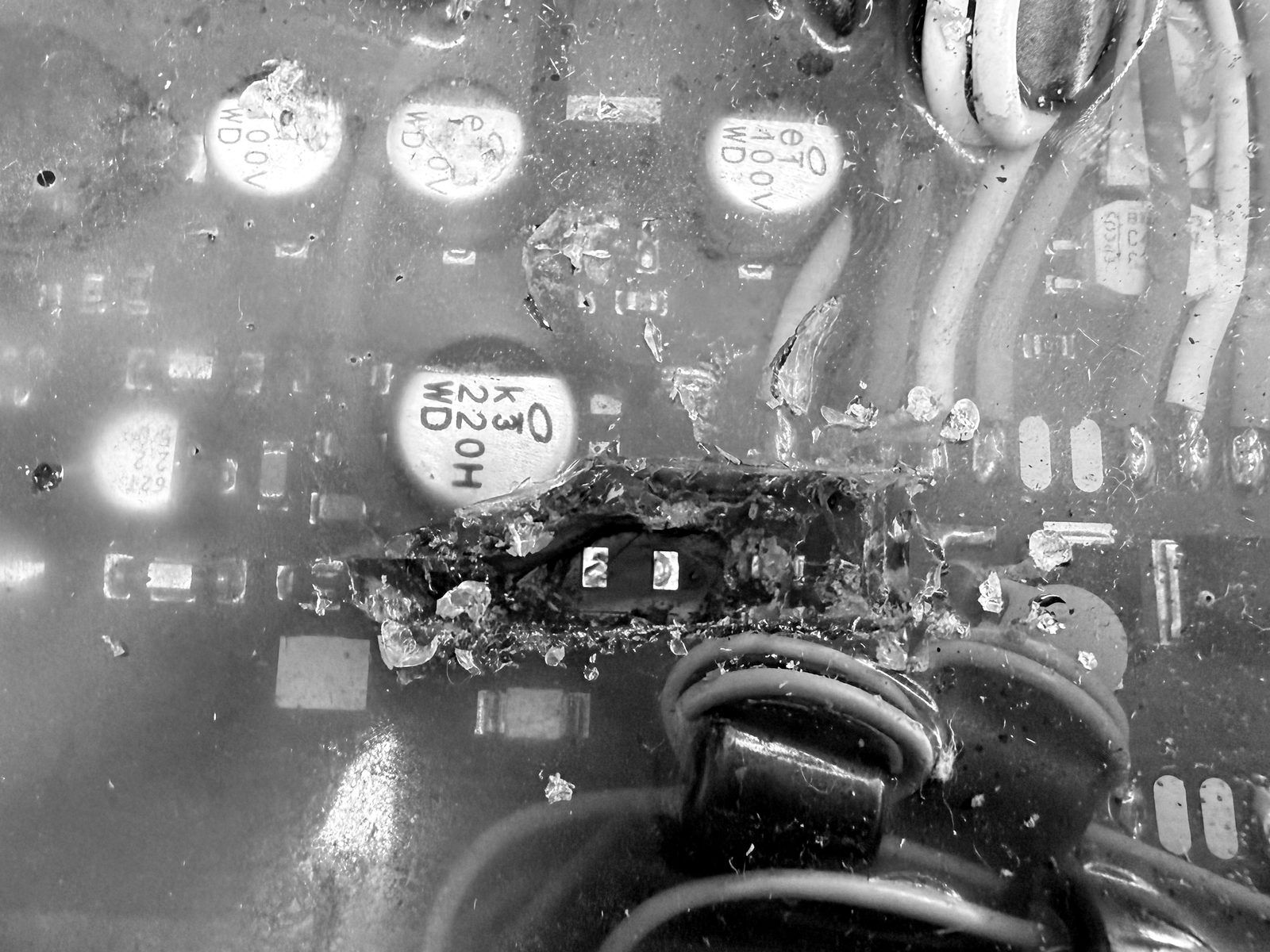
An MMI control panel comes in. No display, no communication on the CAN bus, current draw at zero. The board is fully potted.
What do you do? Remove all the potting and destroy half the board in the process? No.
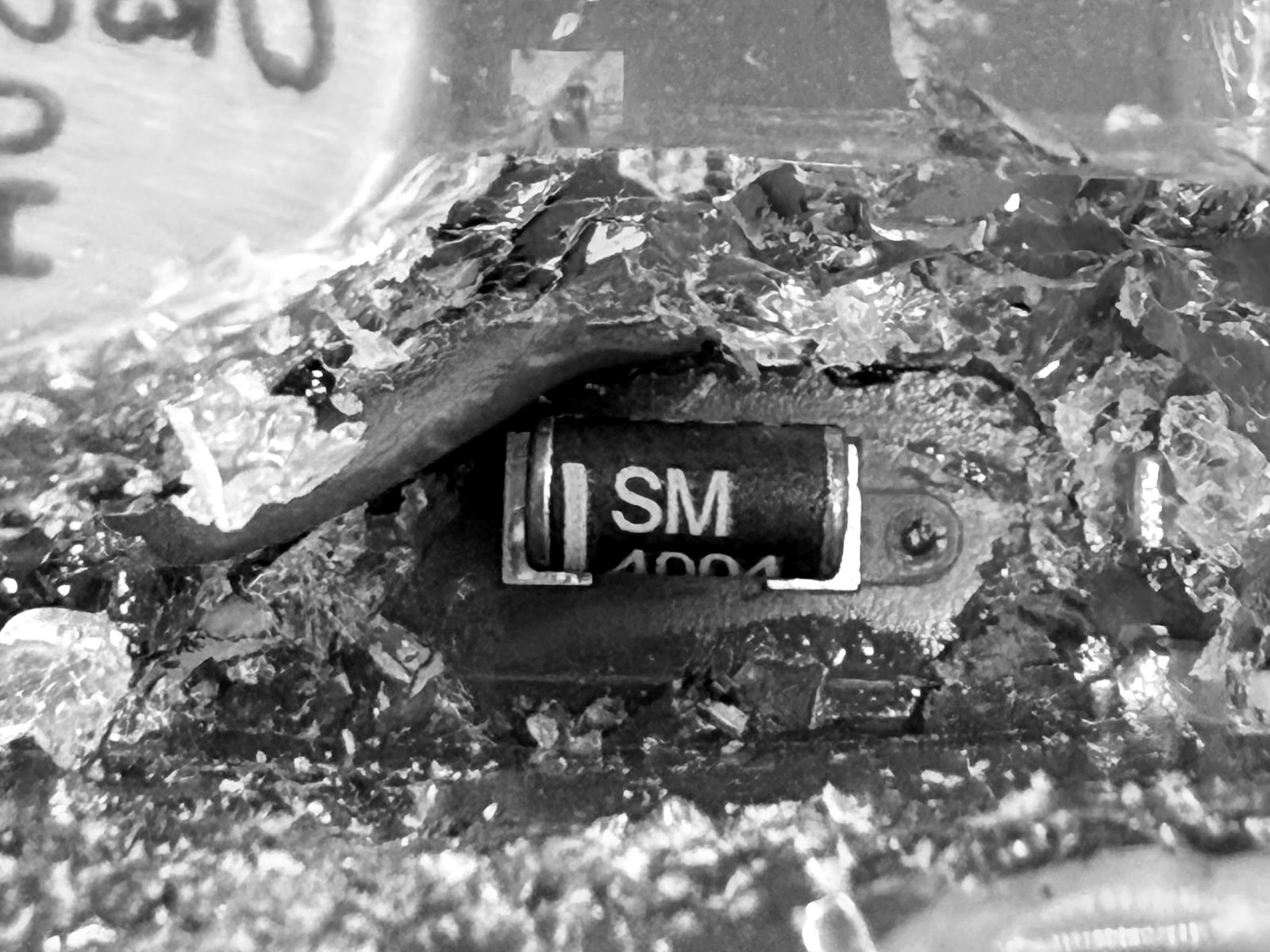
We know the board. We traced the circuit diagram ourselves on a reference unit, component by component. That is why we know where the power supply is. There we open a small window in the potting, a few square centimetres. The rest stays sealed.
The fault was a diode in the supply line. A component costing a few cents. Removed, measured, a suitable replacement diode fitted, window sealed again. The panel works.
A new panel would have cost many times as much. And taken a long time.
How an electronics repair works.
- 1
You send us the part
With the type and serial number of the machine and a short description of what it no longer does. From all over Europe and beyond.
- 2
Incoming test and findings
We test the part thoroughly at the test bench and tell you what is faulty and what the repair costs. Only then do you decide.
- 3
Repair
Replacing components, repairing tracks, sealing the potting. Then a function test on the test rig or on the machine.
- 4
Test report and return
You get the part back with test report and test label. Plus a repair report with photos of what was done.
Every step is in the report.
With us, every repair comes with a test report. It is our workflow, from receipt to dispatch.
We go through each step according to a fixed test instruction. What we measure is recorded in the report with target and actual values. Plus photos, the CAN log and its analysis.
- Visual inspection with macro photos
- De-energised measurements
- Commissioning with current limit
- CAN levels and messages
- Endurance run without error frames
- Test label on the part
You get the report back with the part. You can see what was faulty, what we did and that it works again.
What we work with.
Oscilloscope and CAN analyser
Mixed-signal oscilloscope with CAN decoding. We record the bus on the machine and see which node is silent or sending nonsense. The result is an analysis with images, not just a gut feeling.
Our own circuit diagrams
For many control units the manufacturer no longer has any documents. We have worked them out ourselves, board by board. This knowledge grows with every case.
Test rig and loan units
We test control units on our own test rig before they go back. While the repair takes place, there is a loan control unit or even an exchange part straight away, if we have one in stock.
Send us a photo of the rating plate.
Type, serial number, fault symptoms. Then we will tell you whether a repair is worthwhile before you send anything in.